Chile’s Southern Secret: Where Landmark Buildings Become Living Art
Nestled on the edge of the world, Punta Arenas surprises with architectural gems that tell stories of Patagonia’s rugged soul. I never expected art to emerge from weathered brick and century-old facades—but here, buildings breathe history, color, and resilience. This is more than travel; it’s a visual dialogue between past and present, crafted in iron, wood, and stone. Far from the bustling centers of South America, this windswept city stands as a quiet testament to how isolation, necessity, and human creativity can converge to transform mere structures into living canvases. In Punta Arenas, architecture does not merely shelter—it speaks.
The Gateway to the End of the Earth
Punta Arenas, perched on the Brunswick Peninsula in southern Chile, is one of the southernmost cities in the world. Located just north of the Strait of Magellan, it serves as a vital gateway to Antarctica and a historical anchor in the vast, untamed region of Patagonia. Founded in 1848 as a penal colony, the city evolved into a crucial port during the 19th-century sheep farming boom, attracting European immigrants and merchants eager to capitalize on the wool trade. Its strategic location along maritime routes between the Atlantic and Pacific Oceans brought wealth, cosmopolitan influences, and a unique blend of cultural identities that still echo through its streets.
Despite its remote position—over 2,000 miles south of Santiago—Punta Arenas developed a surprising level of sophistication. The influx of German, British, and Croatian settlers introduced architectural styles and craftsmanship that merged with local needs and materials. Unlike larger Chilean cities shaped by earthquakes and rapid urbanization, Punta Arenas retained much of its historical fabric, allowing its built environment to become a living archive. The city’s isolation, once seen as a limitation, ultimately preserved its character, fostering an architectural identity that is both resilient and expressive.
Today, Punta Arenas is more than a logistical hub for Antarctic expeditions or a stopover for travelers en route to Torres del Paine National Park. It is a destination in its own right—a place where the past is not buried but displayed with pride in the lines of gabled roofs, the hues of painted facades, and the intricate ironwork that adorns century-old buildings. The city’s architecture reflects a story of survival, adaptation, and quiet beauty, shaped by a climate that demands strength and a culture that values memory.
Architecture as Survival: Form Meets Expression
In Patagonia, the wind does not whisper—it commands. With gusts regularly exceeding 60 miles per hour and temperatures that dip below freezing for much of the year, building design in Punta Arenas has always been a matter of survival. Structures must be low to the ground, tightly sealed, and anchored against relentless storms. Yet from these constraints emerged an unexpected aesthetic: a vernacular architecture where practicality and artistry are inseparable. The result is a cityscape where function is never stripped of beauty, and resilience is expressed through color, form, and detail.
One of the most distinctive features of Punta Arenas’ buildings is the use of corrugated metal—particularly for roofs. Originally imported from Britain in the 19th century, galvanized iron was lightweight, durable, and easy to transport, making it ideal for remote construction. Over time, residents began painting these metal roofs in bold colors—crimson, cobalt, emerald—turning utilitarian surfaces into vibrant expressions of identity. These hues were not chosen at random; they reflected family traditions, national origins, or simply the joy of asserting individuality in a harsh environment. Today, the sight of a bright red roof against a gray Patagonian sky feels less like decoration and more like defiance.
Equally significant is the use of native lenga wood, a dense, slow-growing hardwood that thrives in the subantarctic forests of southern Chile. Craftsmen carved this timber into ornate window frames, decorative eaves, and wraparound balconies, often blending European styles like Victorian and Art Nouveau with local craftsmanship. The steeply pitched roofs, another adaptation to heavy snowfall, create dramatic silhouettes that give the city a storybook quality. Even the placement of buildings—clustered closely together, with narrow alleys between them—speaks to a communal instinct to shield against the elements.
What makes Punta Arenas’ architecture so compelling is not just its endurance, but its transformation of necessity into narrative. Every material choice, every structural adjustment, tells a story of human ingenuity. The buildings are not merely shelters; they are records of how people learned to live—and live beautifully—in one of the most challenging environments on Earth.
The Historic Center: A Walk Through Time
Walking through downtown Punta Arenas is like stepping into a carefully preserved moment of late 19th-century prosperity. The heart of the city revolves around Plaza Muñoz Gamero, a tree-lined square framed by historic buildings, cafes with outdoor seating, and the ever-present gaze of Ferdinand Magellan, whose bronze statue stands proudly at the center. Named after a Chilean naval hero, the plaza is more than a public space—it is a stage where history, daily life, and architecture converge.
Along Avenida Colón and neighboring streets, rows of two- and three-story homes showcase the city’s golden age. Many were built by wealthy sheep barons during the wool boom, and their facades reflect the tastes of a transatlantic elite. Delicate wooden fretwork, stained glass transoms, and wrought-iron railings speak of European elegance, while the use of local materials grounds them in Patagonia. Some buildings retain their original paint; others show layers of weathering, with peeling paint revealing decades of color beneath. Yet even in decay, there is dignity—a sense that time has not diminished their presence but deepened it.
One of the most striking aspects of the historic center is its atmosphere. Unlike the manicured preservation of some tourist cities, Punta Arenas embraces a kind of poetic imperfection. Window boxes overflow with geraniums in summer, contrasting with the rusted metal of a nearby roof. A beautifully carved eave might sit above a storefront with a faded awning. These contrasts do not feel jarring; they feel honest. They reflect a city that values continuity over perfection, where old and new coexist without pretense.
The Plaza’s centerpiece, the monument to Magellan, adds another layer of meaning. Erected in 1920 to commemorate the 400th anniversary of the explorer’s passage through the strait, the statue depicts Magellan gazing southward, toward the unknown. For locals, he is not just a historical figure but a symbol of navigation, discovery, and the human drive to explore. Standing in the plaza, surrounded by buildings that have weathered a century of storms, one cannot help but feel a connection to that same spirit—not of conquest, but of endurance.
The Former Bank That Dances with Light
On a quiet corner of Plaza Muñoz Gamero stands a building that embodies the soul of Punta Arenas: a former bank constructed in the early 1900s, now repurposed as a cultural center. Its façade, though modest in scale, announces importance with symmetrical stonework, arched windows, and a central pediment adorned with sculpted floral motifs. But it is inside where the true magic unfolds—a space where architecture becomes performance, and light becomes art.
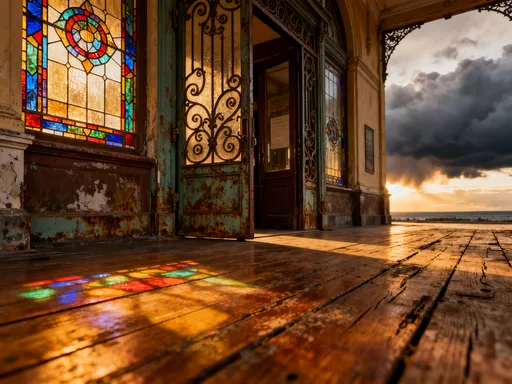
The bank’s original banking hall features a high ceiling supported by carved wooden beams and a floor of polished native timber. The most remarkable element, however, is the stained-glass skylight that spans the roof. Crafted with intricate geometric and floral patterns in deep blues, amber, and forest green, the glass filters sunlight into a constantly shifting mosaic that dances across the walls and floor. At midday, the room glows with warmth; in the late afternoon, long shadows stretch like brushstrokes. Visitors often stand still, simply watching how the light transforms the space minute by minute.
This building’s evolution from financial institution to cultural venue reflects a broader trend in Punta Arenas—of honoring the past while allowing it to serve the present. Today, the space hosts rotating art exhibitions, poetry readings, and historical displays, often featuring local artists and historians. The stained-glass light show becomes part of the exhibit, enhancing paintings or illuminating archival photographs in unexpected ways. It is a reminder that preservation does not mean freezing a building in time, but enabling it to continue its story.
The former bank also symbolizes the city’s economic transformation. Once a center of wool-based wealth, Punta Arenas now thrives on tourism, education, and Antarctic research. The repurposing of historic buildings—like this one—demonstrates a commitment to sustainable urban development. Rather than demolish or imitate, the city chooses to adapt, ensuring that its architectural legacy remains functional, relevant, and alive.
The Cemetery: Stone Poetry Above the Strait
Perched on a gentle hill overlooking the Strait of Magellan, the Cementerio Municipal de Punta Arenas is one of the most extraordinary cemeteries in South America. More than a resting place, it is an open-air museum of memory, craftsmanship, and architectural ambition. Established in the late 19th century, it became the final home for many of the city’s wealthiest families—sheep ranchers, merchants, and ship captains who wanted their legacies etched in stone.
The cemetery’s most striking feature is its collection of mausoleums, each a miniature monument in its own right. Built from granite, marble, and local stone, they reflect a range of styles: Gothic spires, Neoclassical columns, and Chilean folk motifs carved into lintels and doorframes. Many are topped with copper roofs, their green patina a mark of age and exposure. Some have stained-glass windows; others feature iron gates with family initials wrought in curling script. The effect is not morbid, but reverent—a landscape of quiet grandeur where art and remembrance intertwine.
What makes the cemetery especially poignant is its dialogue with nature. The wind, constant and unrelenting, has sculpted the softer stones, smoothing edges and deepening inscriptions. Lenga wood doors warp slightly with humidity, and metal hinges creak like voices from the past. Yet the views are breathtaking: across the strait, the Andes rise in the distance, and ships pass slowly, linking continents. To walk among the tombs is to feel both the fragility and the permanence of human life.
Local guides often share stories of the families buried here—of fortunes made and lost, of children who died young, of immigrants who never returned home. These narratives transform the cemetery from a static monument into a living archive. It is not a place of fear or avoidance, but of connection. In a city shaped by isolation and hardship, the cemetery stands as a testament to the value placed on memory, identity, and the enduring power of beauty—even in the face of mortality.
Modern Murals Meet Maritime Heritage
While Punta Arenas cherishes its past, it is not frozen in time. In recent years, a vibrant street art movement has emerged, adding a contemporary layer to the city’s visual identity. Unlike the grandeur of the historic center or the solemnity of the cemetery, these expressions are bold, colorful, and often playful—appearing on the sides of old warehouses, community centers, and even electrical boxes.
One of the most striking murals depicts a Kawésqar elder, a member of one of the region’s original seafaring peoples, standing in a canoe beneath a star-filled sky. Painted in deep blues and earth tones, the image honors the indigenous heritage of Patagonia, a history often overshadowed by colonial narratives. Another mural shows a humpback whale breaching near an Antarctic research vessel, linking the region’s natural wonders with modern scientific exploration. These works are not merely decorative; they are acts of reclamation, using public space to tell stories that matter.
The artists behind these murals are often young locals, trained at the Universidad de Magallanes or through community workshops. They draw inspiration from maritime legends, local wildlife, and the city’s multicultural roots. Their use of large-scale imagery and vivid color ensures that these stories cannot be ignored. In a place where the wind erases so much, the murals stand as defiant declarations of presence and pride.
This fusion of old and new reflects a deeper truth about Punta Arenas: that heritage is not a relic, but a conversation. The same walls that once held wool inventories now display indigenous cosmology. The same streets that echoed with horse-drawn carriages now carry the footsteps of tourists pausing to photograph a mural. The city’s architectural landscape is no longer defined solely by the past—it is being rewritten, one brushstroke at a time.
Why This City’s Walls Speak Louder Than Words
In Punta Arenas, buildings do not just stand—they speak. They speak of survival in the face of wind and cold, of wealth built on wool and trade, of families who crossed oceans to start anew. They speak of loss, memory, and the desire to leave something behind. And increasingly, they speak of renewal, as new generations reinterpret the city’s story through art, culture, and community.
What makes this city’s architecture so powerful is its authenticity. There are no facades created for tourists, no imitation historic districts. The beauty here is earned—worn into the wood, rusted into the metal, carved into the stone. A cracked windowpane, a faded mural, a lichen-covered tombstone—these are not flaws, but features. They are evidence of time, of life lived fully and openly in a place that demands resilience.
Travelers often seek perfection: pristine beaches, flawless monuments, Instagram-ready vistas. But Punta Arenas offers something more profound—a chance to witness beauty in endurance. To walk its streets is to engage in a silent dialogue with those who came before, to feel the weight of history not as a burden, but as a gift. The city’s buildings are not just structures; they are storytellers, each with a voice shaped by wind, weather, and will.
And perhaps that is the greatest lesson Punta Arenas offers: that art is not confined to galleries or museums. It lives in the way a roof is painted, a balcony is carved, a mural is conceived. It lives in the courage to build something lasting in a place where the elements conspire to erase it. True art, like true life, is not about flawlessness—it is about presence, purpose, and the quiet determination to be seen.
Beauty in the Unlikely
Punta Arenas does not reveal itself easily. It does not dazzle with tropical colors or monumental scale. Instead, it asks for patience, for attention, for a willingness to look beyond the surface. To truly see this city is to appreciate the poetry of persistence—to understand that every chipped paint edge, every wind-bent roofline, every sunlit stain glass panel is part of a larger story.
This journey through Punta Arenas’ architectural landscape is more than a tour of buildings. It is a meditation on how culture is shaped by environment, how memory is preserved in stone and wood, and how creativity can flourish even in the most unlikely places. The city stands as a testament to the human spirit—not in spite of its hardships, but because of them.
For travelers seeking depth, meaning, and authenticity, Punta Arenas offers a rare gift: the chance to witness art not as an object, but as a way of being. It invites us to slow down, to observe, to listen. Because in the end, the most powerful stories are not always the loudest. Sometimes, they are whispered by the wind through a century-old balcony, or painted in light across a wooden floor, or etched in stone above the strait—waiting, quietly, for someone to notice.